
Ramadan Fasting Guide: Maintain Energy, Performance & Boost Longevity
24th Feb 2026

Ramadan Performance Protocol – Harnessing the Ancient Practice for Modern Longevity. Image: Ragnala. Pexels.com
The month of Ramadan offers something rare in our modern world: a structured period of spiritual renewal and physical recalibration. While fasting from dawn to sunset might seem like a challenge to performance, emerging research suggests it may be one of the most powerful tools we have for longevity, metabolic health, and sustained energy – if you approach it strategically.
The Longevity Edge Hidden in Plain Sight
Intermittent fasting isn't new. What's new is our understanding of why it works at the cellular level.
When you fast for 14-16 hours (the typical Ramadan fasting window), your body initiates a process called autophagy – literally "self-eating." Think of it as your cells' deep cleaning protocol. Damaged proteins get recycled, dysfunctional mitochondria get replaced, and your body shifts from constant consumption mode to repair mode.
The research is compelling: extended fasting periods have been linked to improved insulin sensitivity, reduced inflammatory markers, enhanced cognitive function, and activation of longevity pathways like AMPK and sirtuins.
A 2019 study in Cell Metabolism found that even short-term fasting can trigger metabolic switching that improves stress resistance and may increase lifespan.
But here's what matters for you this Ramadan: these benefits compound when you fast consistently over weeks, not just days. The month ahead is about spiritual discipline, and it's the perfect opportunity to fundamentally upgrade your metabolic machinery.
Read our comprehensive guides:
For a deeper dive into how fasting reshapes your metabolism at the cellular level – including the science behind insulin sensitivity, fat oxidation, and mitochondrial function, read:
Does Fasting Improve Metabolism? Benefits of Ramadan Fasting
Factors that Affect Longevity: Longevity Research on Lifespan Extension
The Singapore Reality: Fasting in the Heat
Frankly, fasting in Singapore's tropical climate adds a layer of complexity that requires respect. With humidity often above 80 % and temperatures hovering around 30-32°C, your body faces unique demands.
The challenge isn't just heat, it's the inability to actively hydrate for 13-14 hours while your body continues to sweat and lose electrolytes.
This is where most people stumble: they focus on food but neglect the critical role of hydration timing and electrolyte balance.
The Pre-Dawn Protocol (Suhoor Strategy)
Your suhoor meal isn't just breakfast – it's your metabolic anchor for the next 13+ hours. Here's what actually works:
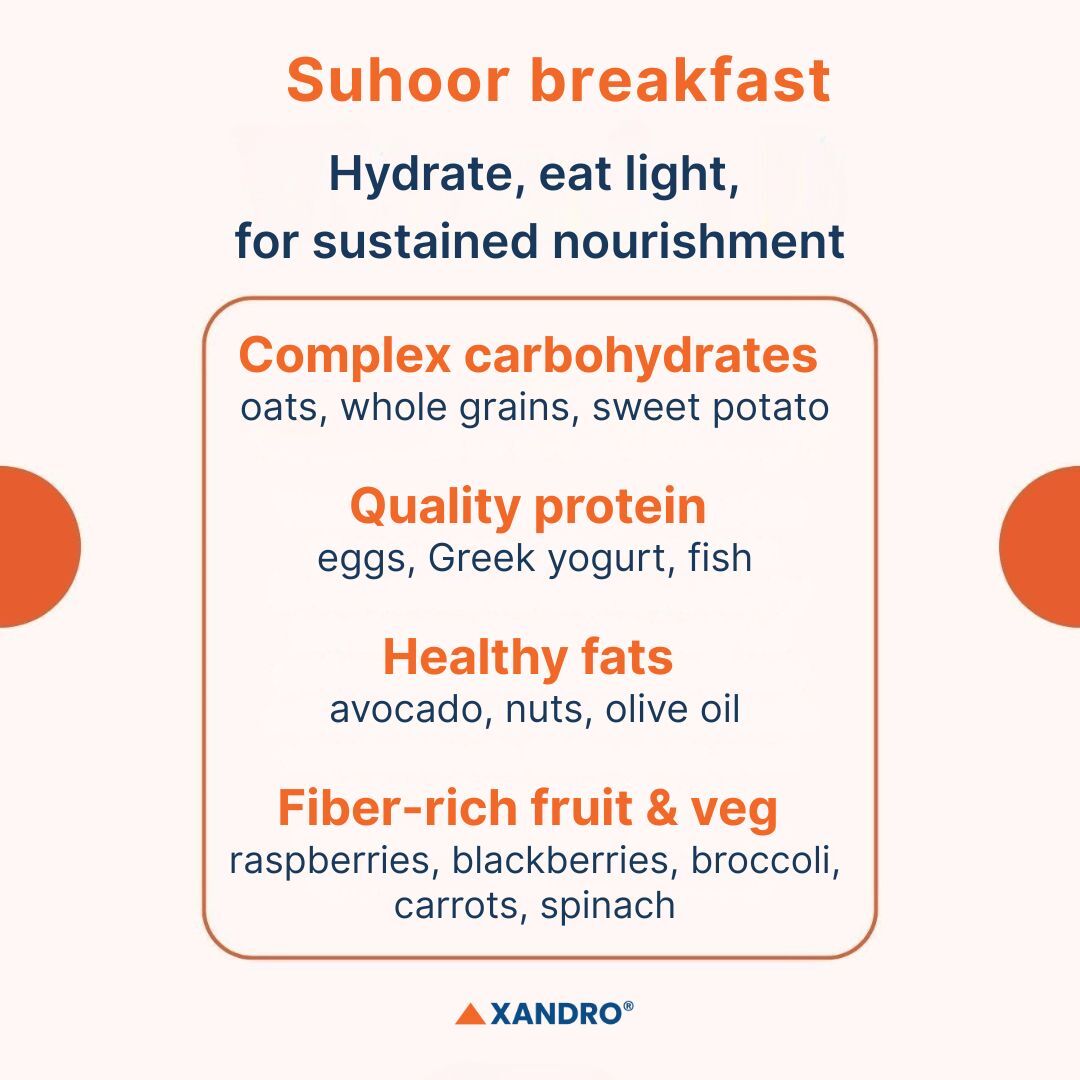
Hydration comes first. Start with 500ml of water immediately upon waking, before anything else. Your body has been fasting through the night and is already in a mild deficit, so this is about cellular hydration.
Take Protocol X V3 with this first glass to optimise your hydration window and support cellular function from the moment you wake. Two needs satisfied in one simple step, right when your body is shifting from fed to fasting metabolism.
Eat for sustained release, not volume. Your instinct may be to eat heavily, but that can backfire. Focus on:
- Complex carbohydrates (oats, whole grains, sweet potato) that release glucose slowly
- Quality protein (eggs, Greek yogurt, fish) to preserve muscle during the fasting window
- Healthy fats (avocado, nuts, olive oil) for satiety and sustained energy
- Fiber-rich vegetables to slow digestion and stabilize blood sugar
Skip the refined sugars and simple carbs. That white bread or sugary cereal will spike your insulin, crash your energy mid-morning, and intensify afternoon hunger.
Timing matters. Eat your suhoor as close to fajr as possible. Every additional hour of digestion means more stable energy when the afternoon heat peaks.
Strategic supplementation at suhoor
This helps set you up for the day ahead. It’s your optimal window for supplements that need food for absorption and provide sustained support:
- Protocol X V3 is best taken on an empty stomach. It's an advanced longevity formula with 20+ science-backed ingredients designed to support 13 vital body functions. The V3 upgrade is particularly relevant for fasting:
- 400 mg NMN (increased from 250 mg) for enhanced NAD+ production and sustained cellular energy when running on stored fuel
- 2000 mg Creatine Monohydrate (doubled from 1000 mg) supports both muscle preservation and cognitive performance during fasting – critical when glucose is unavailable
- 500 mg Glycine directly supports autophagy – the cellular cleaning process activated by fasting – plus improves sleep quality and cellular recovery
- Ca-AKG, Taurine, TMG, CoQ10 and other ingredients work synergistically to support metabolic health, energy production, and stress resilience throughout your fasting hours
Taking Protocol X V3 at suhoor provides comprehensive cellular support exactly when your body shifts from fed to fasting metabolism.
- LPC Neuro delivers omega-3s in their most bioavailable form (lysophosphatidylcholine-bound DHA/EPA), crossing the blood-brain barrier to support cognitive clarity when glucose is low and mental sharpness tends to dip in the afternoon hours.
Maintaining energy through the day
The afternoon energy dip is real, and it's amplified during Ramadan. Here's the truth: you will feel it. But you can minimize it.
Movement is counterintuitive but critical. The instinct is to conserve energy, but gentle movement – a 15-minute walk, light stretching, slow mobility work – actually helps stabilize blood sugar and maintain energy. Your body is burning fat for fuel during extended fasting; movement signals that you still need to function optimally, not shut down.
Temperature management matters more than you think. In Singapore's heat, your body is working harder just to thermoregulate. Stay in air-conditioned environments during peak afternoon hours (2-5pm) when possible. If you're outdoors, seek shade actively. Your body's energy budget is finite – don't spend it fighting ambient heat.
Cognitive load awareness. Your brain uses roughly 20% of your daily energy. During fasting, that's 20% of a reduced energy pool. Schedule deep work and important decisions either in the morning or post-iftar. Use afternoons for routine tasks, administrative work, or activities that don't require peak cognitive performance.
The Break-Fast Window: Don't Waste It
Iftar is when most people undo their progress. The physiological urge to overeat when you break your fast at sunset is powerful after 13+ hours without food, but giving in completely can spike insulin, trigger inflammation, and leave you sluggish for the evening.
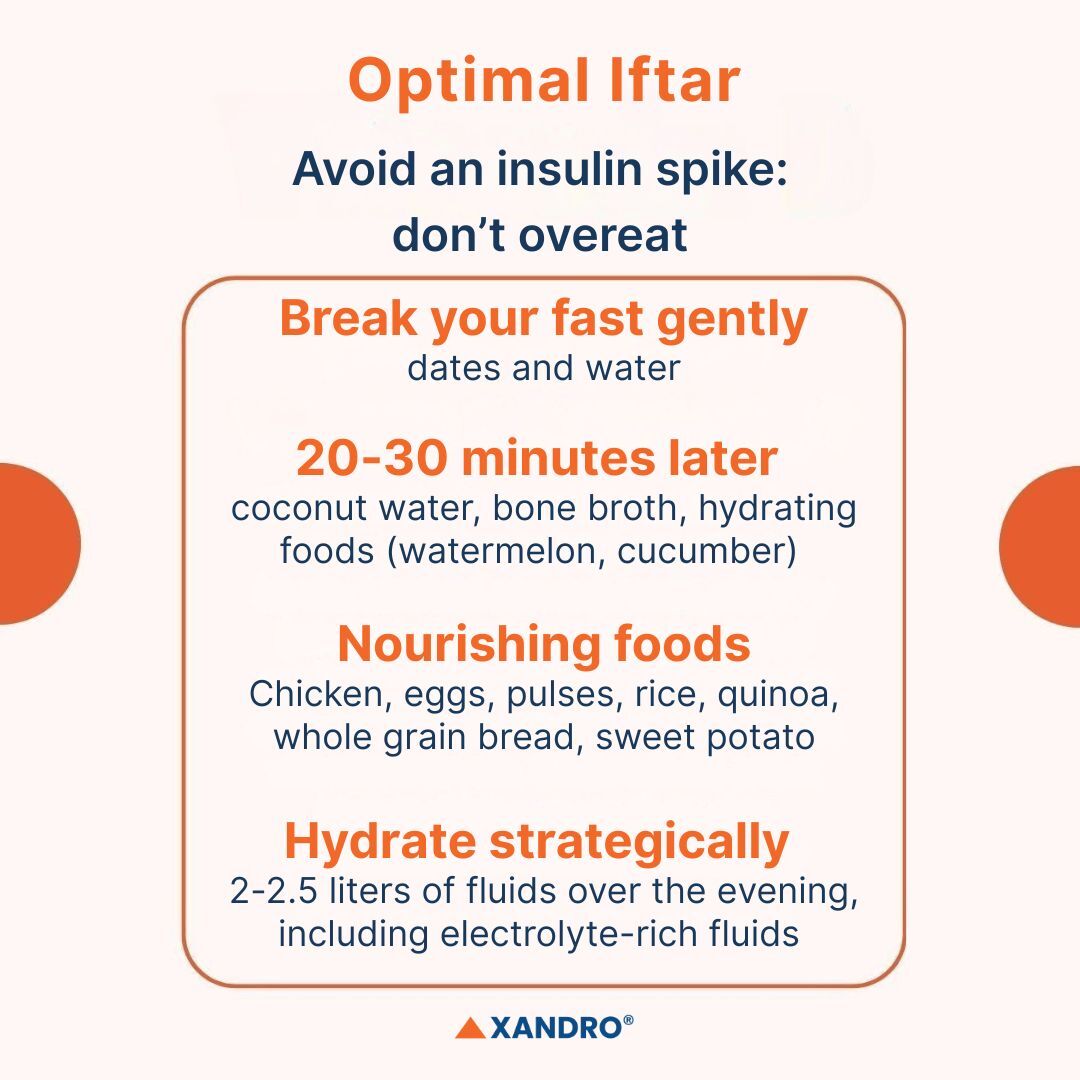
Break your fast gently. Dates and water is traditional for good reason – the natural sugars provide quick energy while fiber slows absorption. Follow with soup or hydrating foods (watermelon, cucumber) before moving to your main meal 20-30 minutes later. This staged approach prevents the insulin rollercoaster.
Hydrate strategically, not excessively. You have roughly 8-10 hours to rehydrate before suhoor. Aim for 2-2.5 liters of water spread across the evening, not gulped down at once. Include electrolyte-rich fluids – coconut water, bone broth, or electrolyte supplements to restore sodium, potassium, and magnesium lost through the day.
Post-iftar supplementation shifts to recovery and preparation:
- Electrolytes are critical for rehydration in Singapore's climate. Drink these throughout your evening eating window, not all at once – preventing the fatigue and brain fog that accompanies dehydration.
- Magnesium Glycinate supports muscle relaxation, sleep quality, and recovery – critical when your eating window is compressed and sleep patterns may shift during Ramadan.
- Spermidine is particularly relevant during Ramadan. It induces autophagy – the same cellular cleaning process activated by fasting – meaning it compounds the longevity benefits you're already getting from the fast itself. Think of it as amplifying the signal your body is already receiving.
- Digestive enzymes if you're eating heavier meals
- Probiotics for gut health (especially important as fasting alters microbiome)
- Adaptogens like ashwagandha or rhodiola to support stress resilience during the metabolic shift
- Creatine for muscle preservation and cognitive support (yes, it works beyond just muscle building)
The principle: Fat-soluble vitamins and comprehensive formulas work best at suhoor (with food and fats for absorption). Recovery supplements and electrolytes work best post-iftar when rehydration is the priority.
This isn't about creating dependency on supplements. The foundation is the fast itself – the metabolic recalibration, the autophagy, the insulin sensitivity. Supplements are the optimization layer for those who want to extract maximum benefit from the month.
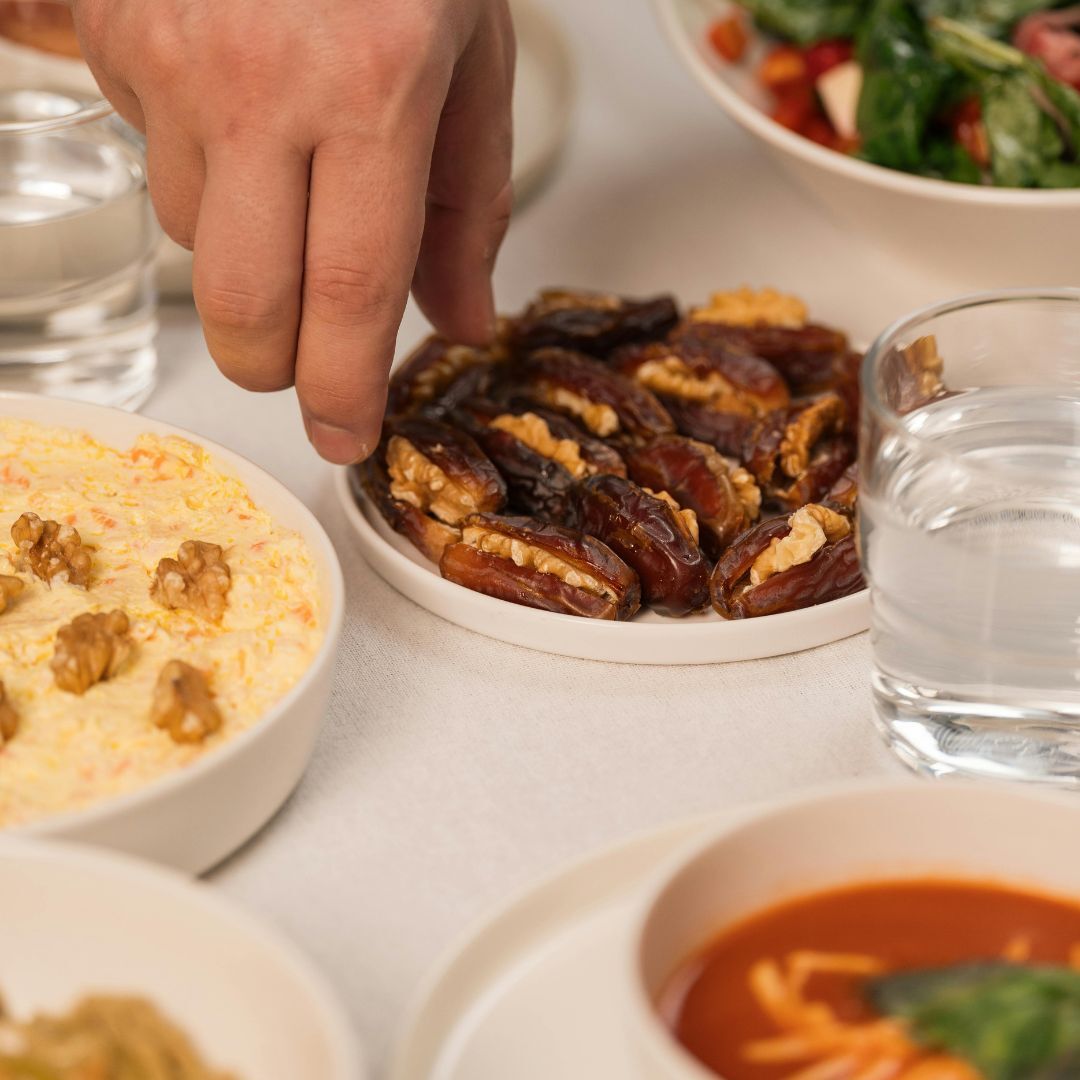
Start slow when breaking the fast. Image: Gül Işık Pexels.com
For Those in Winter Climates: The Opposite Challenge
If you're fasting in winter (shorter days, colder temperatures), you face different constraints. Fasting windows may be only 8-10 hours, but cold stress taxes your metabolism differently. Your body burns more energy maintaining core temperature, so caloric needs at suhoor and iftar should be slightly higher.
Focus on warming, dense foods – stews, root vegetables, quality proteins – and don't skimp on healthy fats. Your body needs them for both energy and temperature regulation.
The Real Performance Metric: Consistency Over Perfection
Here's what matters most: Ramadan isn't a 30-day sprint to optimal health. It's a practice in metabolic flexibility – training your body to function well regardless of external inputs.
Some days will feel harder than others. That's normal. Energy won't be linear. But the compound effect of daily fasting, when done thoughtfully, is where the real gains live: improved insulin sensitivity, reduced systemic inflammation, enhanced mitochondrial function and, yes, likely a few percentage points added to your healthspan.
Don't over-optimize. Don't stress if you miss the ideal suhoor timing or eat more at iftar than planned. The metabolic benefits of fasting are robust – they don't disappear because you weren't perfect.
A Note on Vitamin D During Ramadan
One often-overlooked challenge during Ramadan: reduced vitamin D production.
When fasting hours overlap with peak sunlight (typically 10am-3pm), many people instinctively avoid sun exposure to minimize thirst and heat stress. And in colder climates, there is less sunlight naturally.
Both these scenarios mean less natural vitamin D synthesis exactly when your body needs immune support and calcium regulation most.
Liposomal Vegan D3+K2 at suhoor addresses this gap. The liposomal delivery ensures consistent absorption regardless of your meal's fat content, while the D3+K2 combination supports immune function, muscle performance, and proper calcium distribution – all critical during extended fasting periods.
Consider this: your immune system works harder during metabolic stress, your muscles need support during a compressed eating window, and your bones require proper calcium metabolism when meal frequency drops. Vitamin D underpins all three.
Your Ramadan: Spiritual Renewal and Metabolic Resilience
Ramadan is, first and foremost, a month of spiritual devotion – of reflection, gratitude, and deepening faith. That is its purpose and its gift.
What's remarkable is that the same discipline that nourishes the soul also happens to be one of the most powerful things you can do for your body. As a secondary benefit, the consistent daily fast trains genuine metabolic resilience. You're teaching your body to:
- Access stored energy efficiently
- Function cognitively without constant glucose input
- Maintain performance under constraint
- Recover and repair during the compressed eating window
These aren't just Ramadan skills. They translate directly to longevity, performance under stress, and metabolic health for decades to come.
Science is only now beginning to understand what tradition has known for centuries: there is something profound about periodic fasting. The physical benefits don't compete with the spiritual ones – they sit alongside them, quietly compounding.
Ramadan Mubarak. May this month bring you renewal in every sense.
The information in this article is for educational purposes and not a substitute for medical advice. Individuals with medical conditions, pregnant or nursing women, and those on medication should consult healthcare providers before fasting. Listen to your body – if something feels wrong, do have it checked by a health professional.