

Omega-3 and the Brain: What the New York Times Gets Right, and the Question It Leaves Open
27th Jul 2026
In July 2026, The New York Times asked a question a lot of people quietly wonder about every time they swallow a fish-oil capsule: is any of this reaching my brain?
The article Are Omega-3 Supplements Actually Good for Your Brain? was fair, careful, and worth reading. It laid out a real puzzle, one that has bothered omega-3 researchers for years, and it centered on a new clinical trial that, on the face of it, looks like bad news for anyone taking omega-3 for their mind.
We think the trial matters. We also think the story it tells is more specific, and more interesting, than “fish oil doesn’t work.” Here is what the evidence shows, what the recent run of skeptical headlines gets right, and where it stops short.
The puzzle: healthy blood levels, flat trial results
The tension the NYT set out to explain is this: When researchers measure how much omega-3 is in people’s blood, those with higher levels tend to have healthier brain scans, better memory and thinking scores, and a lower risk of dementia. That pattern shows up in large population studies, again and again.
Then researchers run the obvious experiment: give people omega-3 supplements and see if their brains do better. And the benefit mostly does not appear. Trial after trial comes back flat.
So there is a reliable association – more omega-3 in the body tracks with a healthier brain – that stubbornly refuses to become a result when you hand people a capsule. That gap is the whole story.
The study at the center of the New York Times piece
The article focused on a new trial from the University of Southern California.
Researchers gave older adults who ate little fish, and who had at least one risk factor for dementia, a high dose of DHA – the omega-3 that matters most for the brain – or a placebo, and followed them for two years.
The clever part was in the measurement. In some participants, the researchers sampled the cerebrospinal fluid – the fluid that bathes the brain and spinal cord. This let them confirm something most earlier trials could not: the supplement really did raise omega-3 levels inside the central nervous system, not just in the blood. In the language of the field, they confirmed target engagement. The DHA reached where it was meant to go.
And still, after two years, there was no measurable improvement in memory, thinking, or brain structure compared with placebo.1
This deserves to be taken seriously, not explained away. It is not a one-off. It lines up with the large VITAL trial, in which more than 4,000 healthy older adults took about a gram of fish oil a day for two to three years with no cognitive benefit,2 and with USC’s own earlier study in 2020.3
The NYT was right that this is a consistent pattern, and also right that it does not mean omega-3 is unimportant. It means this particular kind of supplement did not translate its biology into a measurable brain benefit.
What “it reached the brain” proves, and what it doesn’t
Here is where the story is not finished. Reaching the cerebrospinal fluid is a genuine milestone. But reaching the fluid around the brain is not the same as getting inside brain cells in the form they can use.
Is the DHA getting inside brain cells, or just near them?
Picture the cerebrospinal fluid as the loading dock outside a building. DHA reaching the dock does not prove it got through the door and onto the shelves inside the cells, where the brain builds it into the membranes of neurons.
It depends on the right key
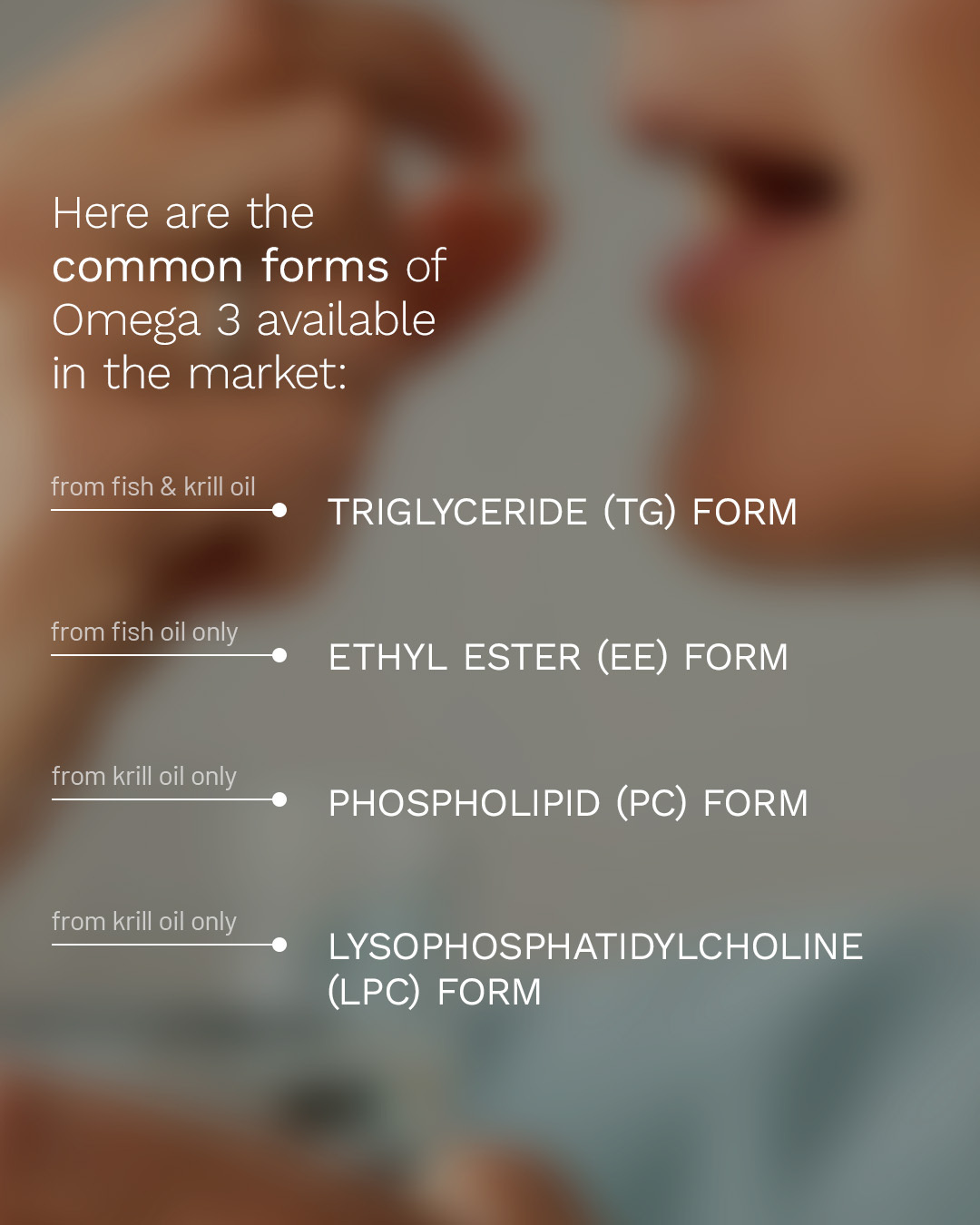
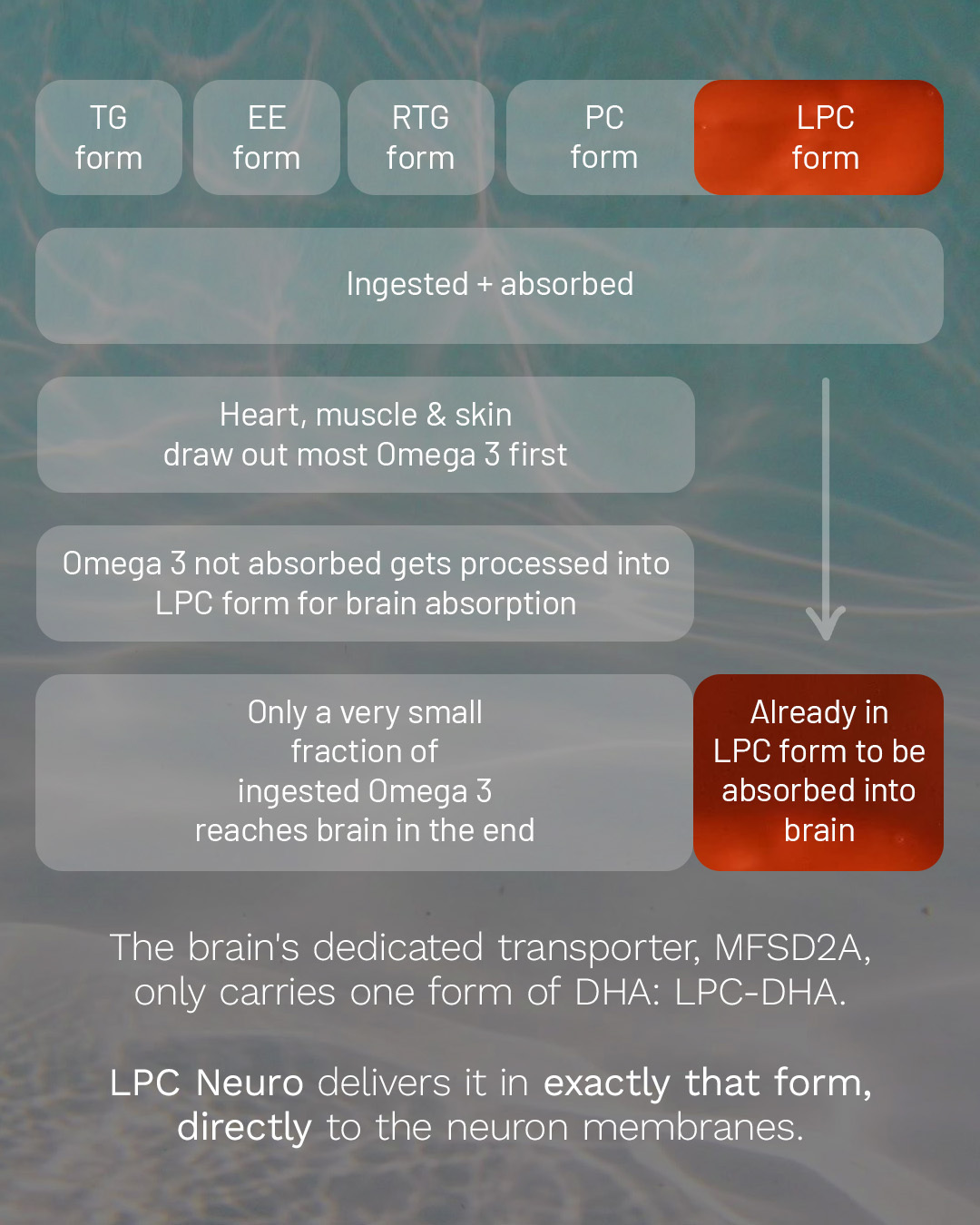
The brain’s main door for DHA is a transporter called MFSD2A, identified by a team at Duke-NUS in Singapore.4 It is fussy about the form DHA arrives in. It preferentially carries DHA bound to a carrier called lysophosphatidylcholine, or LPC – not the triglyceride or ethyl-ester packaging used in most standard fish oil and algal supplements.4
Based on what has been published, the USC trial used a standard high-dose DHA supplement, not an LPC form. So it did not test whether the brain’s preferred door would have moved DHA into brain tissue more effectively.
How much does this doorway matter?
The clearest answer comes from what happens when it fails. Children born with mutations that disable the MFSD2A transporter cannot import DHA into the brain, and they develop a fatal condition marked by a profoundly underdeveloped brain – microcephaly.5 It is the starkest possible demonstration that getting DHA into brain tissue, not just near it, is what counts.
Does the brain hold onto the DHA it gets?
There is a second, different, open question. In some people, the brain may break DHA down faster than it can store it.
This matters most for people who carry APOE4 – a common gene variant that raises the risk of Alzheimer’s disease and appears to change how the brain handles omega-3. About half the USC participants carried it.
Research from the same group suggests APOE4 carriers clear supplemented DHA faster, and that the variant ramps up an enzyme that turns DHA into inflammatory by-products rather than letting it settle into brain-cell membranes.6 Even DHA that is delivered well might get used up before it can help.
So, there are two different problems, and it is worth holding them apart:
- Delivery – getting DHA to the right place, in the right form.
- Retention – keeping it there once it arrives.
Improving one does not automatically fix the other. That distinction is the piece the skeptical headlines tend to skip – and it is why “the supplement reached the brain and nothing happened” is not the end of the argument.
The other recent challenges: EPA and the “you already get enough” argument
The USC trial is not the only recent study to complicate the fish oil story. Two other threads are worth addressing directly, because they are doing the rounds too.
EPA and the brain’s blood vessels
A 2026 animal study found that EPA – the other main omega-3 in fish oil – reprogrammed the brain’s blood vessels and impaired their repair after repeated head injury in mice, with the authors raising the possibility of relevance to chronic traumatic encephalopathy.9 This is a single preclinical finding in a specific injury model, and its relevance to everyday brain health in people is not established.
It is worth knowing about, not worth alarm. What it does do is reinforce a point worth making anyway: omega-3” is not one thing. EPA and DHA are different molecules with different jobs, and folding them together as “fish oil” hides more than it reveals.
Do you already make enough from your diet?
The second line of skepticism is quieter, and in some ways more reasonable: maybe most people do not need to supplement at all, because the body makes its own DHA from the plant-based omega-3, ALA, found in flaxseed, chia, and walnuts.
There is truth in this. The body does convert ALA into DHA – but inefficiently, particularly for DHA and particularly in men, where the conversion rate is very low.8
For general health, a plant-rich diet with some ALA is genuinely valuable. As a reliable way to enrich the brain with DHA specifically, ALA has real limits. Some researchers have also hypothesized that a fiber-rich, plant-forward diet may support gut bacteria that help calm the same DHA-degrading enzyme APOE4 ramps up. That remains a hypothesis, not a demonstrated finding, but it is one more reason diet and individual biology – not a capsule alone – sit at the center of this.
Why DHA still matters, and why food is the most reliable source
None of this means DHA doesn’t matter for your brain. It matters enormously, which is exactly why the delivery question is worth getting right.
DHA is a structural material, woven into the membrane of every neuron. There it keeps those membranes fluid and flexible, so receptors respond quickly and signals pass cleanly from one cell to the next.9
Run low over years and the effect is rarely a dramatic failure. It is a quiet fuzziness, the kind most people put down to tiredness or age, with a physical basis in the material the brain is built from.
And here is the reassuring part the skeptical headlines tend to skip: the flat results came from capsules, not from food:
Eating oily fish as part of a whole, plant-rich diet delivers DHA in a more varied set of carriers than most supplements provide, and it remains one of the best-supported things you can do for a brain you want to keep sharp across decades. If you take one thing from the recent noise, it is not that DHA stopped mattering. It is that how you get it matters more than the headlines suggest.
What to do about omega-3 and your brain right now
Whatever the next trial shows, a few practical points follow directly from the evidence as it stands.
Don’t make a sudden change from one headline. Fish oil is taken for several reasons, cardiovascular health among them,13 and this research was about cognition in older adults who ate little fish. Nothing here is a reason to stop on your own. If you take fish oil, that is a conversation for you and your doctor.
Eat oily fish, and eat it with a good diet. Salmon, fish roe, mackerel, sardines, and anchovies are the richest dietary sources of preformed DHA, delivered in a more varied set of carriers than most supplements provide.14 One clear theme of the research is that omega-3 works best alongside good nutrition, not as a stand-in for it. Think “and,” not “or.”
Know the limits of ALA. If your omega-3 comes mainly from flaxseed, chia, and walnuts, you are getting ALA, which the body converts to brain DHA at a low rate. These are valuable foods for other reasons, but they are not a reliable path to brain DHA on their own.
If you supplement for your brain, look at the form, not just the dose. The milligrams on the label are only part of the picture. The blood-brain barrier treats triglyceride, ethyl ester, phospholipid, and LPC forms of DHA differently, and that difference is exactly what the flat trials never tested.
Think in decades, and start earlier than feels urgent. The population data link lower DHA status to smaller brain structures years before most people notice a change in daily life. Your capacity to think clearly across a decade is not fixed – it is an asset you build or draw down, part of what we call Cognitive Biocap. The material your neurons are built from is its foundation.
Where this leaves LPC Neuro
So where does all this leave a product built specifically around the LPC form of DHA - LPC Neuro?
We will be straight with you, because you’re the kind of reader who can tell when a brand is not. The recent evidence does not prove LPC Neuro works where standard DHA did not. No one has finished the trial that would settle it either way.
A human study directly comparing an LPC-DHA form against standard DHA is underway,15 and until those results are in, the human question is genuinely open.
We’re not going to tell you the USC trial would have come out differently with our capsule. We don’t know that, and neither does anyone else.
What we can say is narrower, and we think more trustworthy.
LPC-DHA was not tested.
Every trial that has come back flat tested a form of DHA the brain’s own gateway does not readily accept. None of them tested LPC-DHA, the form MFSD2A was built to carry.4 That is not a loophole; it is a legitimate, unexplored gap – and the human genetics of the transporter, including the microcephaly syndrome above, confirm how much the pathway matters.5
Delivery may get harder with age.
This route comes under pressure with age. In aging mice, the brain's uptake of DHA declines, along with the transporter that carries it.¹⁰ That evidence is preclinical, and no one has shown the same timeline in people. But it runs in the same direction as everything else here: the harder it becomes to get DHA into the aging brain, the more it matters to give the brain's own door the one form it is built to accept. A door that opens less easily with age is a reason to feed it what it recognizes, not a reason to give up on getting DHA there. It is the exact gap LPC Neuro was designed around.
What LPC Neuro uses.
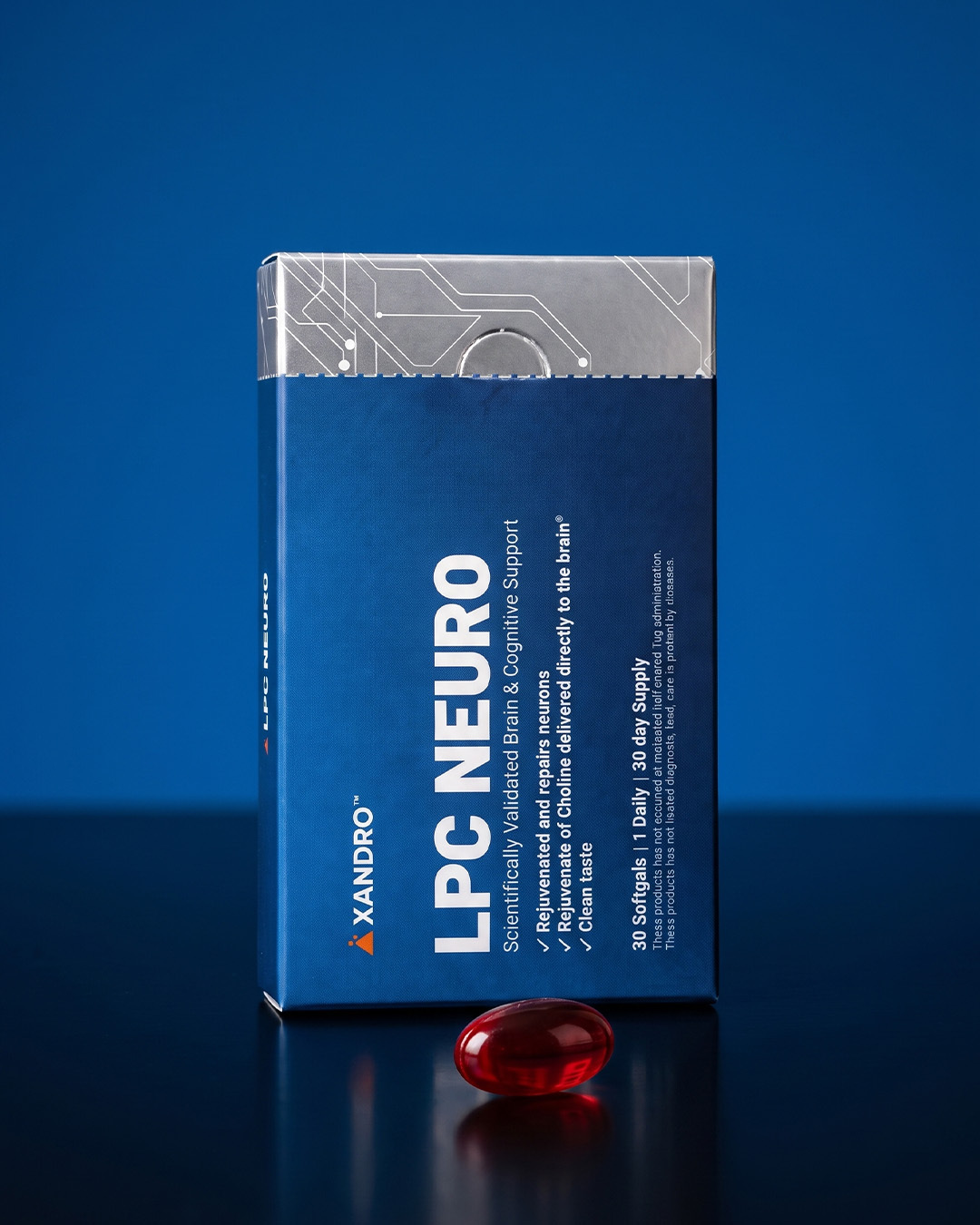
Our flagship omega-3, LPC Neuro, uses Lysoveta™, a specialized LPC-DHA derived from Antarctic krill, to deliver DHA in the molecular form the transporter preferentially carries. XANDRO® holds exclusive access to Lysoveta for Asia.
The scientific case for the approach rests on three layers – one established, one disputed, and one that will settle the question.
- The transporter is real and specific. MFSD2A is an established gateway for LPC-bound DHA at the blood-brain barrier, identified at Duke-NUS in 2014.4 It is not a hypothesis. Children born without a functioning version of this transporter cannot get DHA into the brain at all.5 LPC Neuro delivers DHA in the form this gateway is built to carry.
- How much more DHA reaches the brain is still being determined. Early preclinical work reported substantially greater brain DHA enrichment with the LPC form compared with standard forms.11 More recent independent studies have not consistently reproduced that magnitude, and the question is now an active area of scientific investigation.16,17 The mechanism is established. The scale of its practical advantage is what the research community is still working to pin down – which is exactly why the human trial matters.
- A human trial will be the real test. A head-to-head comparison of LPC-DHA against standard DHA in older adults is currently recruiting, with results expected in the coming years.15 Until those results are in, the honest answer is that the delivery advantage is plausible, not proven – and the human data, not another mouse study, is what will settle it.
And delivery, as this whole piece has argued, is only one piece of the puzzle. How well an individual holds onto DHA — shaped by genetics and metabolism — matters too. Better delivery is a plausible strategy, not a guarantee, and not a treatment.
The case for LPC-DHA and LPC Neuro
So the honest case for staying with LPC Neuro is not “the science proved everyone else wrong.” It is this: if you are going to invest in getting DHA to your brain, it makes sense to use the form the brain’s own door is built to accept – as part of a life that already includes oily fish, a plant-rich diet, sleep, and movement.
LPC Neuro is a science-led answer to a specific delivery problem. It is complementary to a brain-healthy life, not a substitute for one.
Related reading
→ Your brain is your longest-running investment: why cognitive decline isn’t inevitable
→ What Happens to Your Brain When It Doesn’t Get Enough DHA
Frequently asked questions
Does this study mean omega-3 is useless for my brain?
No. The study does not say omega-3 doesn’t matter – people with more omega-3 in their bodies still tend to have healthier brains. It shows that this particular type of supplement, in this trial, did not produce a measurable brain benefit over two years. Omega-3 remains an important nutrient. The open question is how best to get it where the brain can use it, and that sits alongside diet, sleep, exercise, and the rest of a brain-healthy life.
Should I stop taking my fish oil?
That is a conversation for you and your doctor, not a decision to make from one headline. Fish oil is taken for several reasons, heart health among them, and this study was specifically about cognition in older adults who ate little fish. Nothing here is a reason to change on your own.
Should I just eat more fish instead of taking a supplement?
Eating fish as part of an overall healthy, plant-rich diet is well supported and sensible. One theme of the research is that omega-3 works best alongside good nutrition and lifestyle, not as a stand-in for them. Think “and,” not “or.”
What makes LPC Neuro different from ordinary fish oil?
Standard fish oil and algal supplements deliver DHA in a form the brain’s main DHA doorway, the MFSD2A transporter, does not take up as readily. LPC Neuro is built around the LPC-bound form that this doorway prefers. Early animal studies suggested the LPC form may deliver DHA to the brain more effectively than the standard form, though more recent replication work has produced mixed results. The goal is better delivery to the brain, as one part of a brain-healthy routine – not a replacement for diet and lifestyle.
Can I get enough LPC-DHA from diet alone?
Some whole foods supply omega-3 in phospholipid-bound forms closer to what the brain’s transporter prefers, with fish roe the richest example and oily fish like herring and salmon contributing phospholipid-bound omega-3 as well.14 Eating oily fish regularly is worthwhile and worth keeping up. What’s harder is getting a consistent, meaningful amount of the specific LPC-DHA form from diet alone, since it’s concentrated in foods most people don’t eat often. There’s also early, animal-stage evidence that the brain’s ability to take up DHA declines with age, which is part of why brain-targeted delivery is an area of active research. That gap is what LPC Neuro is designed to address, as a complement to a fish-and-plant-rich diet, not a replacement for it.
So will LPC Neuro improve my memory or prevent dementia?
We can't claim that, and we won't. Early animal studies suggested a delivery advantage for the LPC form, though more recent replication work has produced mixed results,16,17 and it has not been shown to improve memory or prevent cognitive decline in people. A human trial testing this kind of question is ongoing,15 but the results aren't in. LPC Neuro is best seen as a science-led approach to a specific delivery problem, and a complement to a brain-healthy lifestyle, not a treatment or a guarantee.
I carry the APOE4 gene – is this especially for me?
The APOE4 story is genuinely complicated. Carriers seem to process and clear DHA differently, which is one reason simply adding more DHA hasn’t clearly helped them in trials. We don’t have evidence that LPC Neuro overcomes that difference, so we can’t position it as an APOE4 solution. If you know your APOE4 status and are thinking about brain health, that is a good topic for a doctor who can look at your whole picture.
The trial showed the supplement reached the brain and still didn’t help – so why would better delivery matter?
It is exactly the nuance the science is wrestling with. Reaching the fluid around the brain isn’t the same as getting inside brain cells in the form they use best – that is the delivery question LPC targets. But there is a second issue: in some people, especially APOE4 carriers, the brain may break DHA down faster than it can store and use it. Better delivery might help with the first problem without solving the second. Both are still being studied, which is why we are careful not to over-promise.
This product is a health supplement. It is not intended to diagnose, treat, cure, or prevent any disease. Always consult a qualified healthcare professional before starting any supplement, particularly if you are taking prescription medications, managing a health condition, or are pregnant or breastfeeding.
References
-
- Yassine HN, et al. CNS target engagement of high-dose DHA supplementation in older adults at risk for dementia: a randomized, double-blind, placebo-controlled trial. EBioMedicine. 2026;129:106316. DOI: 10.1016/j.ebiom.2026.106316. PMID 42315445. | Human RCT (CSF-confirmed CNS target engagement; no cognitive or structural benefit at two years).
- Kang JH, et al. Marine n-3 fatty acids and cognitive change among older adults in the VITAL randomized trial. Alzheimer’s & Dementia (N Y). 2022;8(1):e12288. DOI: 10.1002/trc2.12288. | Human RCT (n = 4,218; no cognitive benefit over 2–3 years).
- Arellanes IC, Choe N, Solomon V, He X, et al. Brain delivery of supplemental docosahexaenoic acid (DHA): a randomized placebo-controlled clinical trial. EBioMedicine. 2020;59:102883. PMID 32690472. DOI: 10.1016/j.ebiom.2020.102883. | Human RCT (n = 33 randomized, 26 completed imaging).
- Nguyen LN, Ma D, Shui G, Wong P, Cazenave-Gassiot A, Zhang X, Wenk MR, Goh ELK, Silver DL. Mfsd2a is a transporter for the essential omega-3 fatty acid docosahexaenoic acid. Nature. 2014;509(7501):503–506. PMID 24828044. DOI: 10.1038/nature13241. | Animal study (mice; MFSD2A identified as the major transporter for DHA uptake into the brain via LPC). Duke-NUS, Singapore.
- Guemez-Gamboa A, Nguyen LN, Yang H, Zaki MS, et al. Inactivating mutations in MFSD2A, required for omega-3 fatty acid transport in brain, cause a lethal microcephaly syndrome. Nature Genetics. 2015;47(7):809–813. PMID 26005868. DOI: 10.1038/ng.3311. | Human genetic study with animal model validation (disabled DHA transporter; microcephaly).
- Ebright B, et al. Effects of APOE4 on omega-3 brain metabolism across the lifespan. Trends in Endocrinology & Metabolism. 2024;35(8):745–757. DOI: 10.1016/j.tem.2024.03.003. | Review (APOE4, cPLA2, and DHA retention).
- Karakaya E, Berber B, Eskiocak O, et al. Eicosapentaenoic acid reprograms cerebrovascular metabolism and impairs repair after brain injury, with relevance to chronic traumatic encephalopathy. Cell Reports. 2026;117135. PMID 41887219. DOI: 10.1016/j.celrep.2026.117135. | Animal study (mice; repetitive mild traumatic brain injury model).
- Burdge GC, Calder PC. Conversion of alpha-linolenic acid to longer-chain polyunsaturated fatty acids in human adults. Reproduction, Nutrition, Development. 2005;45(5):581–597. PMID 16188209. DOI: 10.1051/rnd:2005047. | Review (human; ALA to EPA/DHA conversion rates; sex differences).
- Bazinet RP, Layé S. Polyunsaturated fatty acids and their metabolites in brain function and disease. Nature Reviews Neuroscience. 2014;15(12):771–785. PMID 25387473. DOI: 10.1038/nrn3820. | Review (brain lipid composition; DHA structural and signaling roles in neurons).
- Iwao T, Takata F, Matsumoto J, et al. Aging decreases docosahexaenoic acid transport across the blood-brain barrier in C57BL/6J mice. PLoS One. 2023;18(2):e0281946. PMID 36795730. DOI: 10.1371/journal.pone.0281946. | Animal study (mice; age-related decline in brain DHA uptake and MFSD2A protein).
- Sugasini D, Thomas R, Yalagala PCR, Tai LM, Subbaiah PV. Dietary docosahexaenoic acid (DHA) as lysophosphatidylcholine, but not as free acid, enriches brain DHA and improves memory in adult mice. Scientific Reports. 2017;7(1):11263. PMID 28900242. DOI: 10.1038/s41598-017-11766-0. | Animal study (mice).
- Sugasini D, Yalagala PCR, Goggin A, Tai LM, Subbaiah PV. Enrichment of brain docosahexaenoic acid (DHA) is highly dependent upon the molecular carrier of dietary DHA: lysophosphatidylcholine is more efficient than either phosphatidylcholine or triacylglycerol. The Journal of Nutritional Biochemistry. 2019;74:108231. PMID 31665653. DOI: 10.1016/j.jnutbio.2019.108231. | Animal study (rats).
- Kris-Etherton PM, Harris WS, Appel LJ. Fish consumption, fish oil, omega-3 fatty acids, and cardiovascular disease. Circulation. 2002;106(21):2747–2757. PMID 12438303. DOI: 10.1161/01.CIR.0000038493.65177.94. | AHA scientific statement. Flag for Stage 4 PubMed verification.
- Burri L, Hoem N, Banni S, Berge K. Marine omega-3 phospholipids: metabolism and biological activities. International Journal of Molecular Sciences. 2012;13(11):15401–15419. PMID 23203133. DOI: 10.3390/ijms131115401. | Review (fish roe as rich source of PL-bound omega-3). Flag for Stage 4 PubMed verification.
- University of Cincinnati. Optimizing CNS DHA delivery in elderly adults at risk for dementia. ClinicalTrials.gov identifier: NCT06933095. First posted 2025. https://clinicaltrials.gov/study/NCT06933095. | Human RCT (recruiting; LPC-DHA vs standard DHA; independent academic trial).
- Klievik BJ, et al. Dietary phospholipid carriers of DHA do not increase brain DHA levels: a replication study. Journal of Lipid Research. 2025;66(11):100913. PMID 41016602. DOI: 10.1016/j.jlr.2025.100913. | Animal study (mice; direct replication of Sugasini; no brain DHA increase).
- Andriambelo B, et al. Providing lysophosphatidylcholine-bound omega-3 fatty acids increased EPA, but not DHA, in the cortex of mice. Prostaglandins, Leukotrienes and Essential Fatty Acids. 2024;201:102622. PMID 39642444. | Animal study (APOE3/APOE4 mice; no significant brain DHA increase).
Article discussed: Smith DG. “Are Omega-3 Supplements Actually Good for Your Brain?” The New York Times, 8 July 2026.
Tags: